Pickit!
UX Design Project
ROLE USER RESEARCH, DESIGN, LOW&HIGH-FIDELITY PROTOTYPE, USER-TESTING
TOOLS FIGMA, ADOBE XD, BALSAMIQ, ILLUSTRATOR, SKETCHUP
TIMEFRAME 7 WEEKS
ADVISOR STEPHANIE m WILSON, STUART SCOTT, INTERACTION DESIGN MODULE
INTRODUCTION
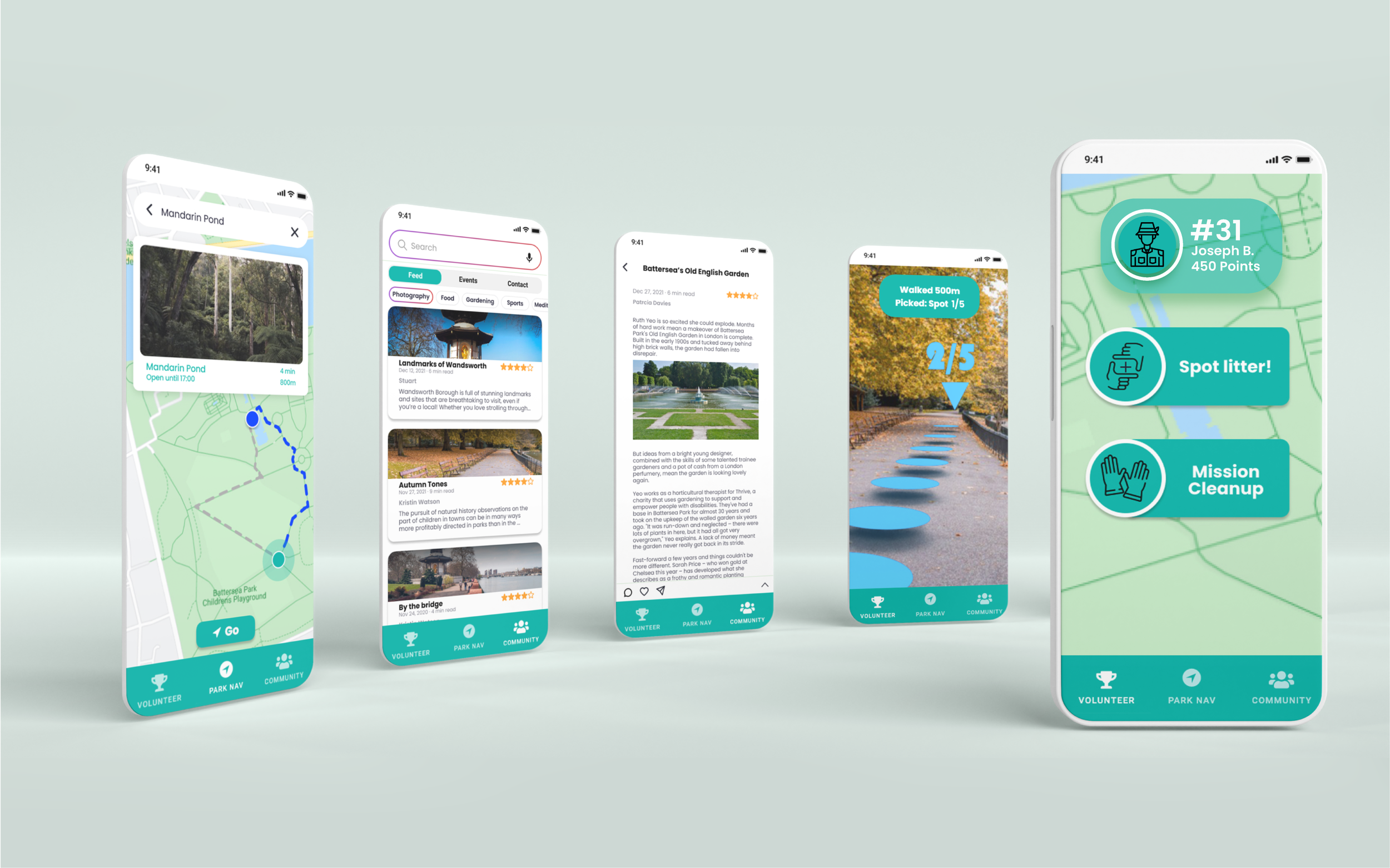
Solution: The project explores the role of technology in encouraging voluntary acts of social responsibility. It seeks to encourage litter-picking and reporting at Battersea park, London. In addition to public forum, and navigation, the proposed design includes a crowdsourced map of geolocated pictures of litter that allows volunteers to plan their litter-picking route across the park. The design therefore allows all visitors to contribute towards cleaning the park in accordance with their ability and commitment.
PROCESS | UX DESIGN
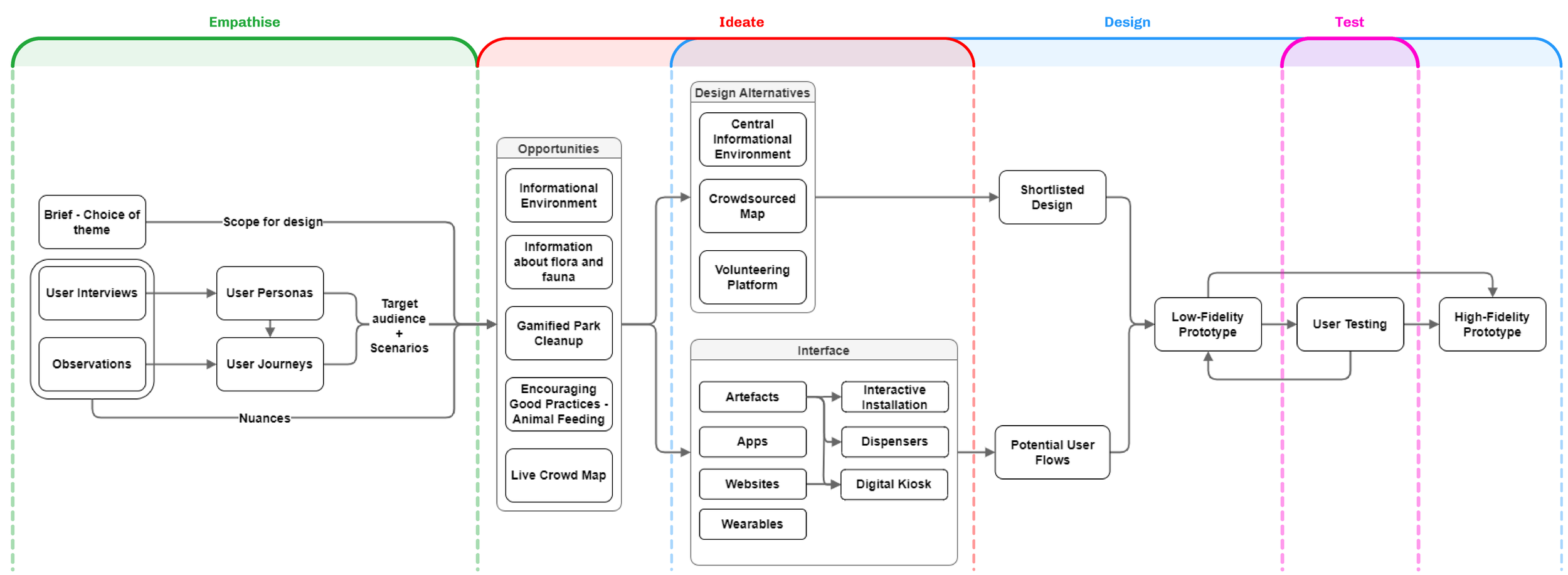
User research helped uncover potential opportunities to improve the visitors’ experience.
User Journeys and Personas drew out common user traits, while user observations and interviews added nuances to assumed scenarios for ideation.
The project brief provided scope and direction for potential opportunities.The ideation stage employed How-Might-We questions and bodystorming to imagine opportunities. Six potential ideas emerged out of the ideation stage.
Three of these ideas were explored through future journey mapping.Eventually one design alternative was shortlisted, prototyped, tested and detailed based on its ability to comprehensively tackle multiple pain points.
EMPATHISE | Research
The research stage involved understanding the users of the park in terms of their motivations, pain points, and goals associated with their visit. This was done through semi-structured interviews with the visitors as well as observation of their activities, environment, and likely touchpoints.

Observation Mapping
Field Notes & Photographs
(Weekdays and Weekends)
Interviews
Thematic Analysis & Empathy Maps
from 16 Interviews
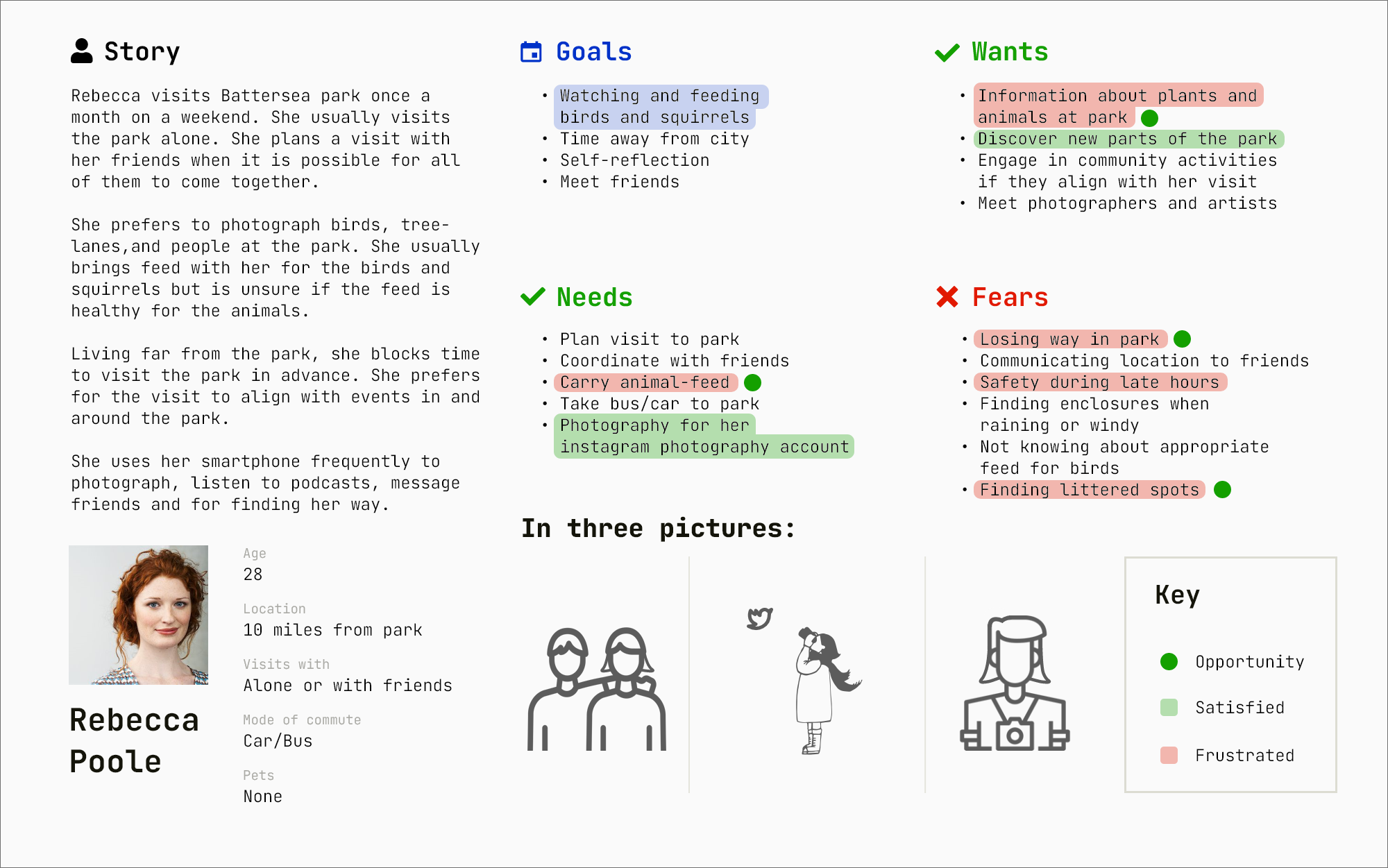
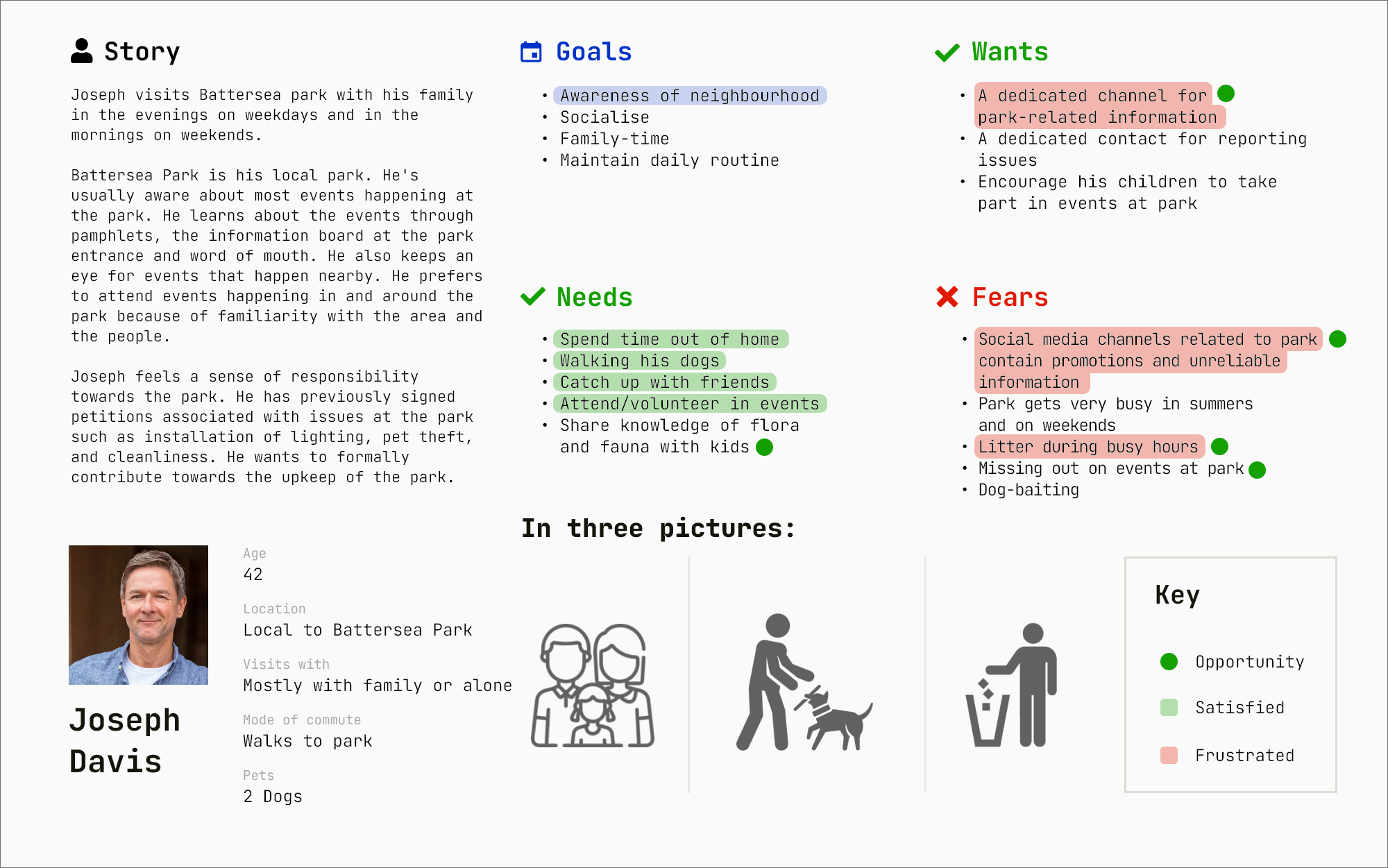
User Personas
2 Personas
& Typical User Groups
User Journeys
Journeys spanning
experience at Battersea Park
Aggregated Empathy Maps
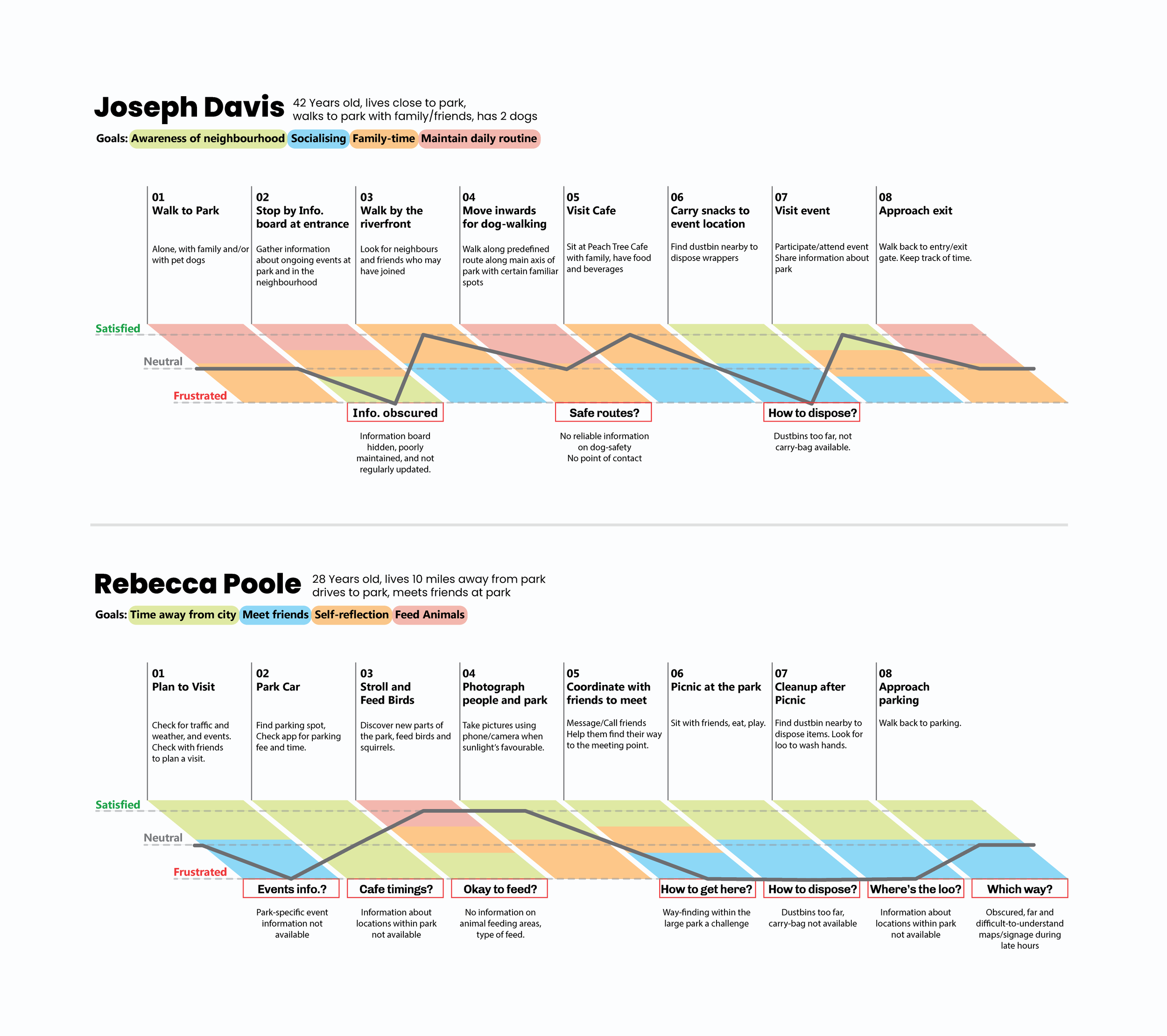
Thematic analysis of interview transcripts and user observations helped identify common user traits, motivations to visit park and pain-points.
User Personas
User Journeys
IDEATE | POTENTIAL USER JOURNEYS
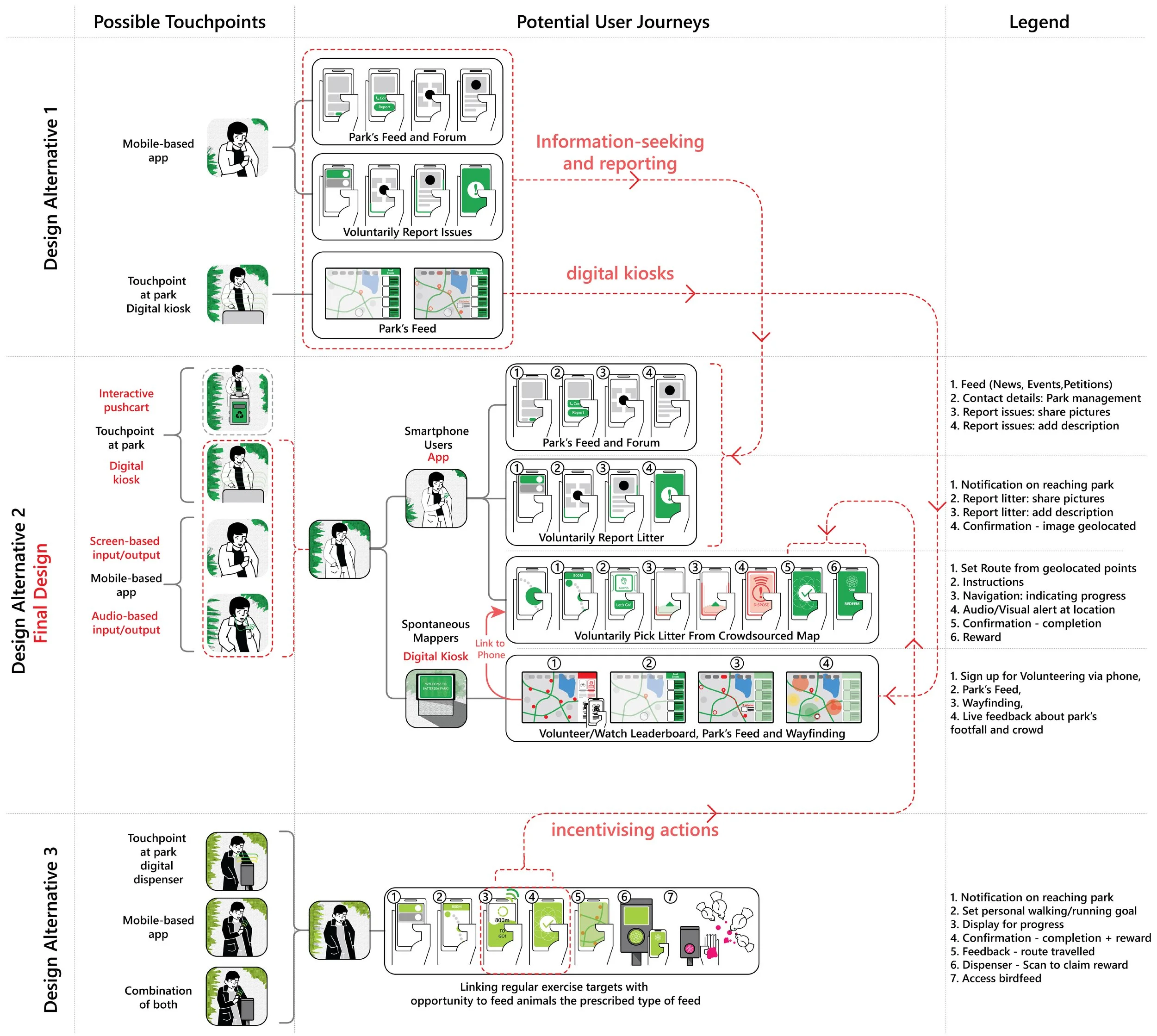
Three design alternatives were explored through journey mapping of potential scenarios and suitable touchpoints to be designed:
Informational environment for visitors: A digital information platform for: details of the park, events, contact of park management etc. Additionally, the platform would host a public forum to allow visitors to initiate, find, and contribute towards any cause associated with the park by reporting issues, signing petitions and donating.
➔ Potential Touchpoints: To be accessed via (1) digital kiosks (at park entrances and intersections) or via (2) a mobile application to allow access beyond park.Encouraging right practices for animal-feed: Dispensers located at bird/squirrel hotspots meant to store and dispense animal-feed. Aimed to regulate animal-feeding by making prescribed feed accessible in regulated amounts and by demarcating dedicated feeding zones.
Access to the animal-feed was proposed to be tied to a phone-based application that would track personally defined fitness goals by visitors, e.g. distance to walk or run, among other exercises.
➔ Potential Touchpoints: (1) Digital dispenser and (2) a mobile applicationChosen Idea - Gamified Park Cleanup: The design includes a crowdsourced map of geolocated pictures of litter generated by people to allow volunteers to plan their litter-picking route throughout the park. The proposal sought to gamify the experience for the volunteers by conveying progress and completion of tasks through visual and auditory feedback. To make the design more engaging and encouraging, incentives such as redeemable points and a public leaderboard were proposed.
➔ Potential Touchpoints: (1) Digital kiosks located at entrances and intersections to access the (i) navigation with option to overlay crowdsourced map,
(ii) a central leaderboard of volunteers, (iii) newsfeed, events (iv) litter-picking gear, and (2) a mobile application to navigate through the park to report/pick litter.
DESIGN | PROTOTYPE
The corresponding user flows for the final design includes three main sections:
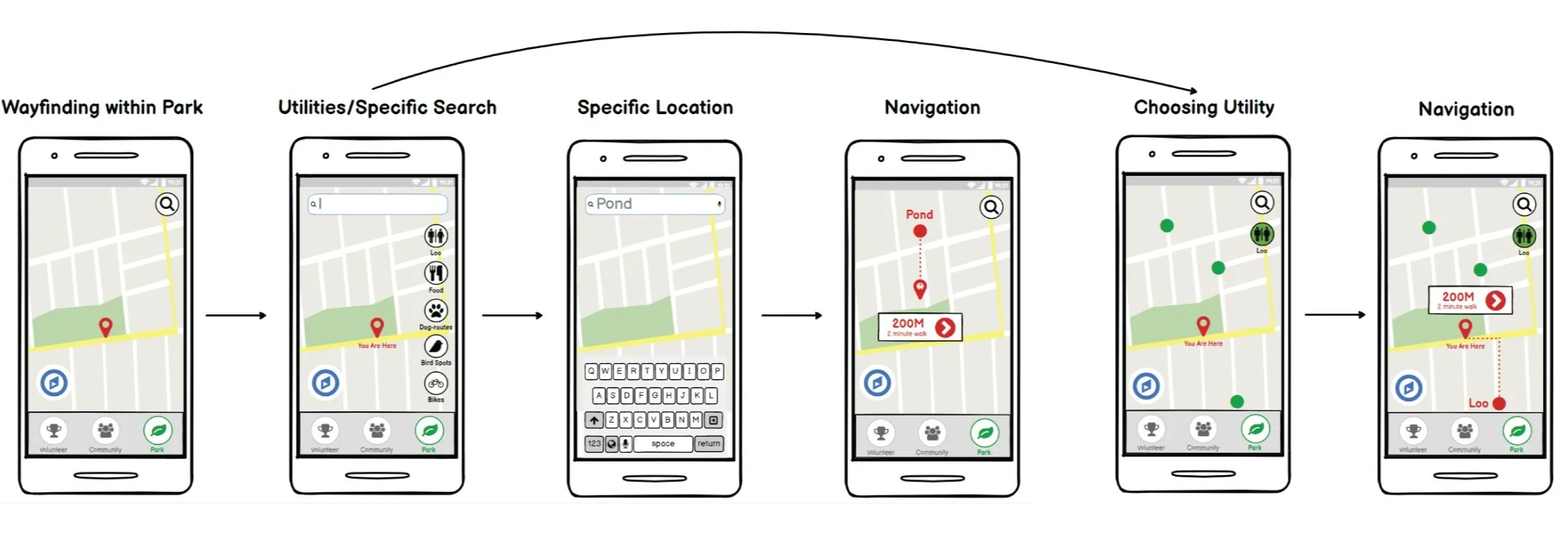
Park Nav- a wayfinding feature that guides visitors to various locations of the park providing information such as a route and an estimated time.
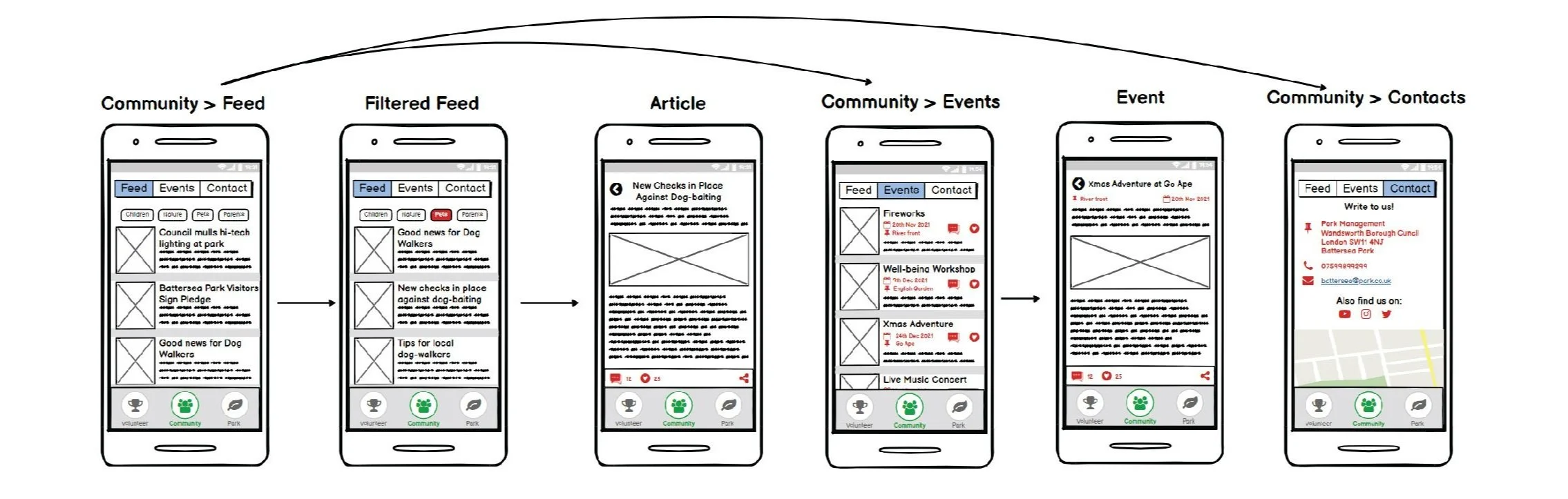
Community - A public forum for accessing, sharing, and contributing information related to the park.
Volunteer - A section for volunteers where they can report litter and find cleaning spots. This section includes:
A crowdsourced map highlighting reported locations of litter with pictures and brief descriptions
A leaderboard highlighting volunteering activity at the park on a daily, monthly and yearly basis
Rules of the game for users to report litter, and to assist in navigation between points such as gear dispensers (to collect disposable bags and litter-pickers), reported locations, and dustbins.
The first two sections are common to both mobile application and digital kiosks located at the park. The crowdsourced map and the leaderboard are also common to both the mobile application and the digital kiosk. The instructions and navigation features associated with volunteering are exclusive to the mobile application to allow mobility throughout the park. The scope of the project was limited to mobile user interface design and testing.
Mobile Application - Park Nav
Way-finding within park supports direct and filtered search for locations
Community
Park’s feed, Events and Contact details of park’s authority and associated services
Volunteer
Gamified experience for reporting and picking litter
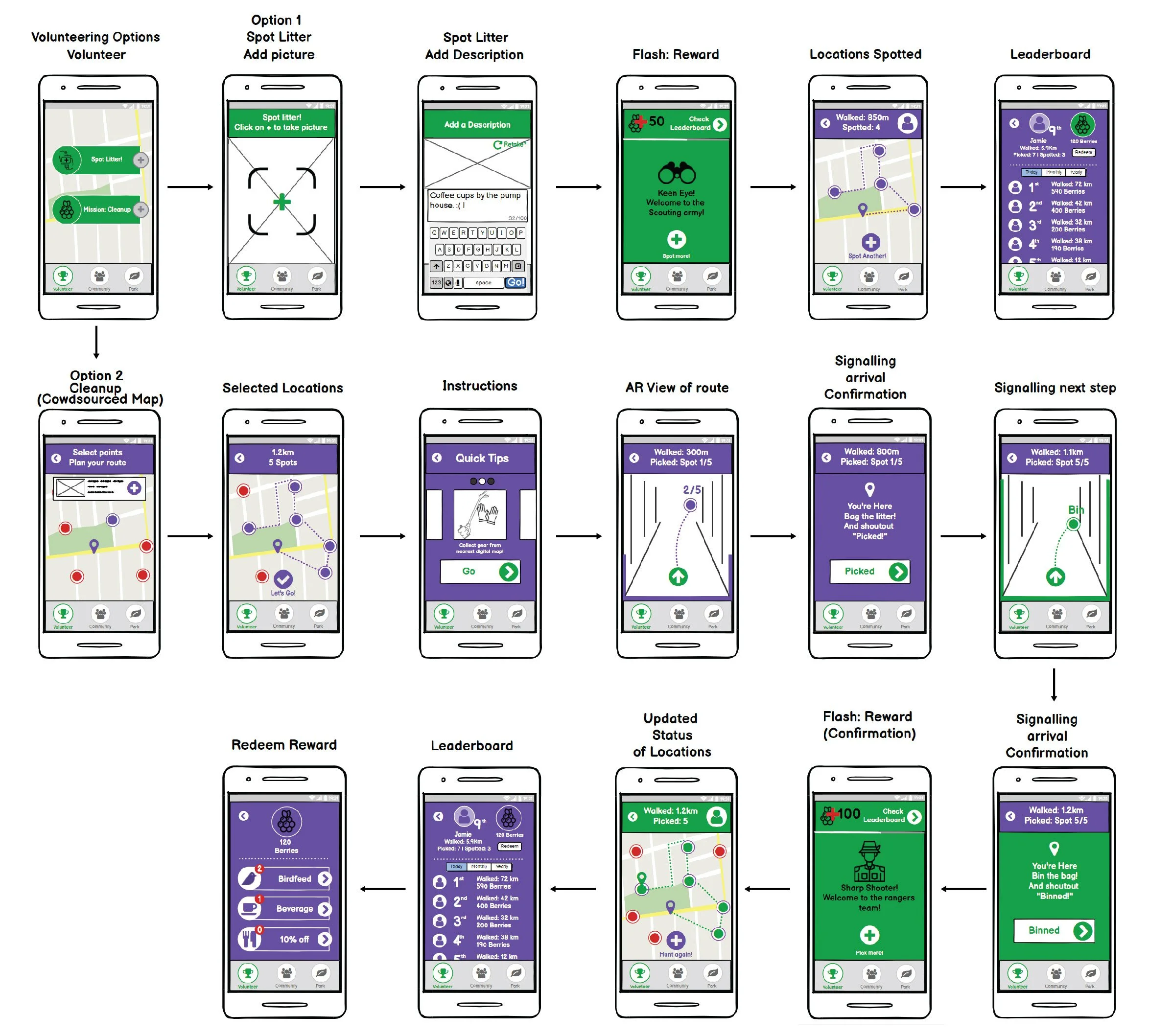
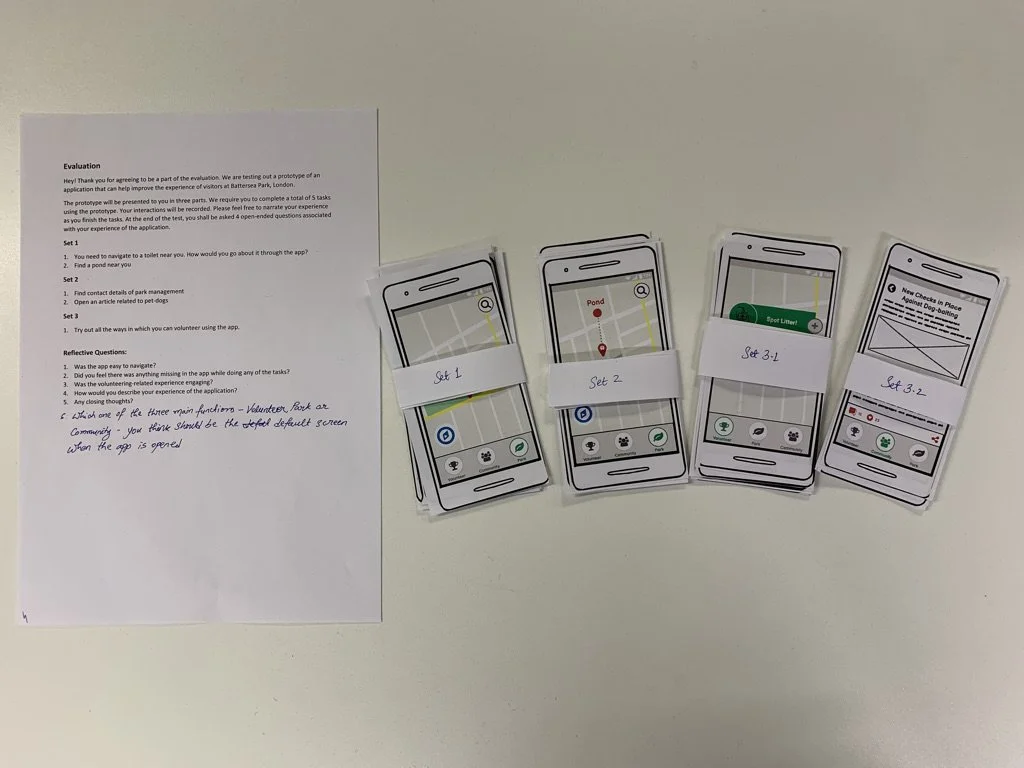
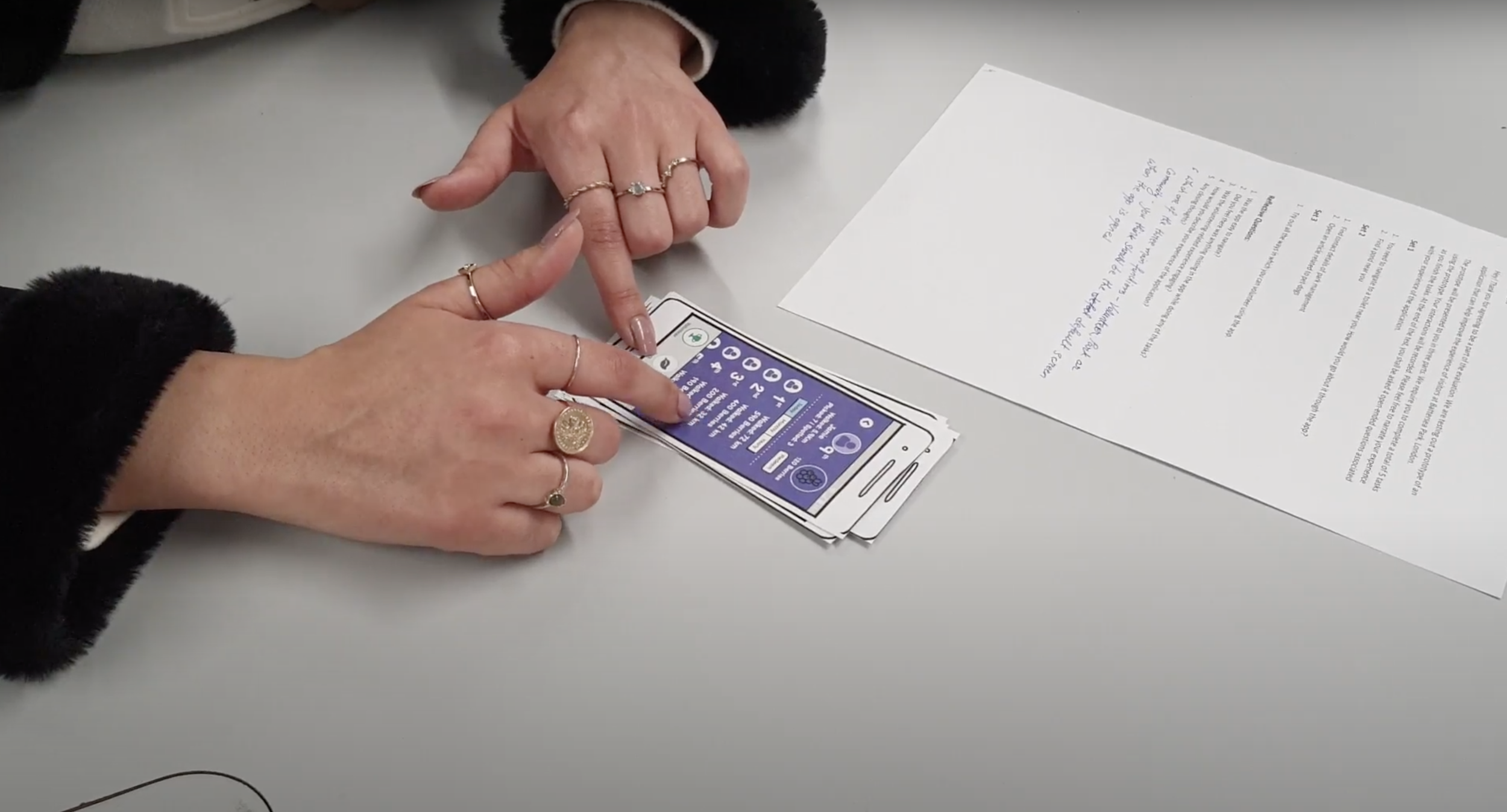
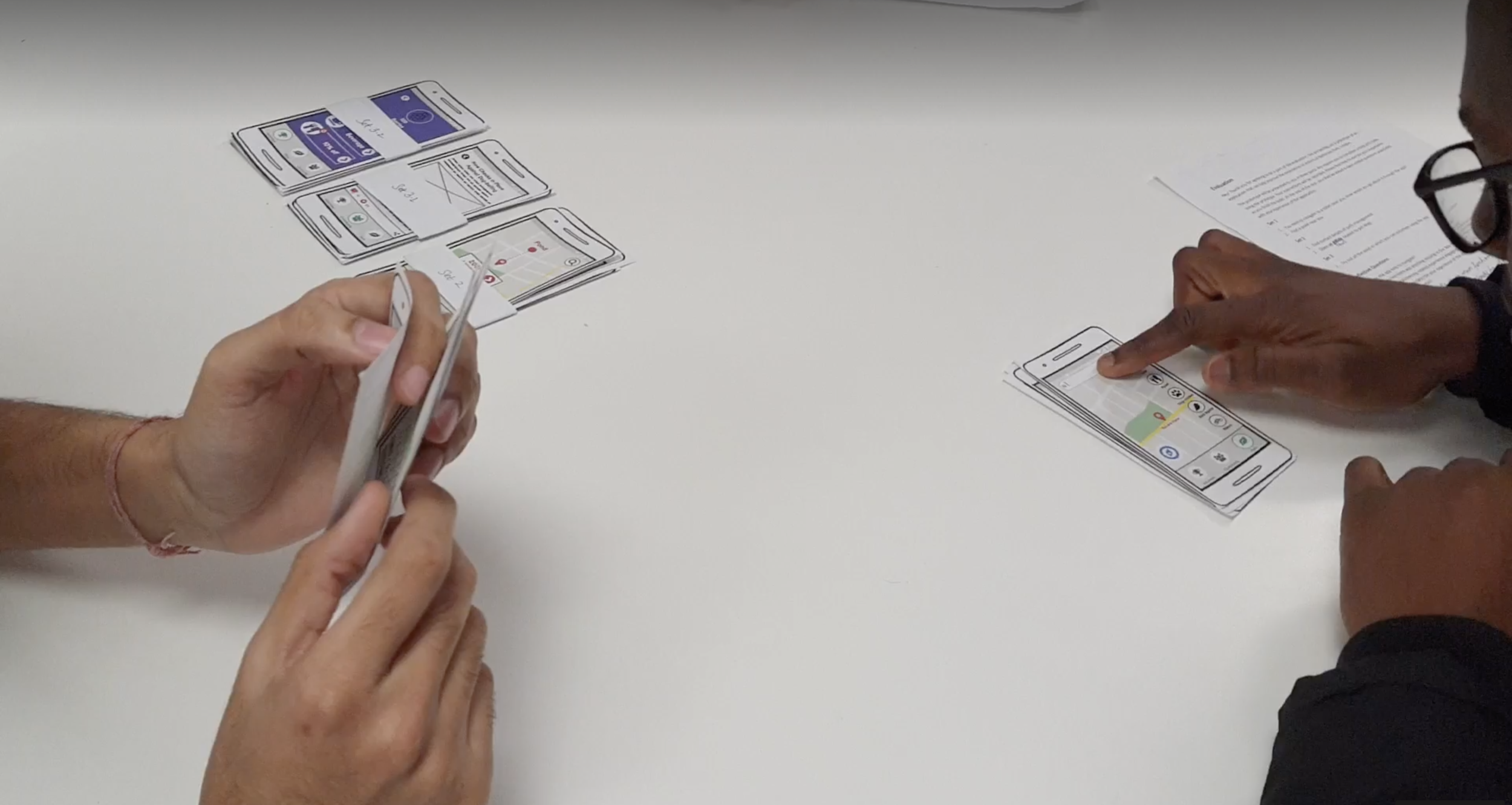
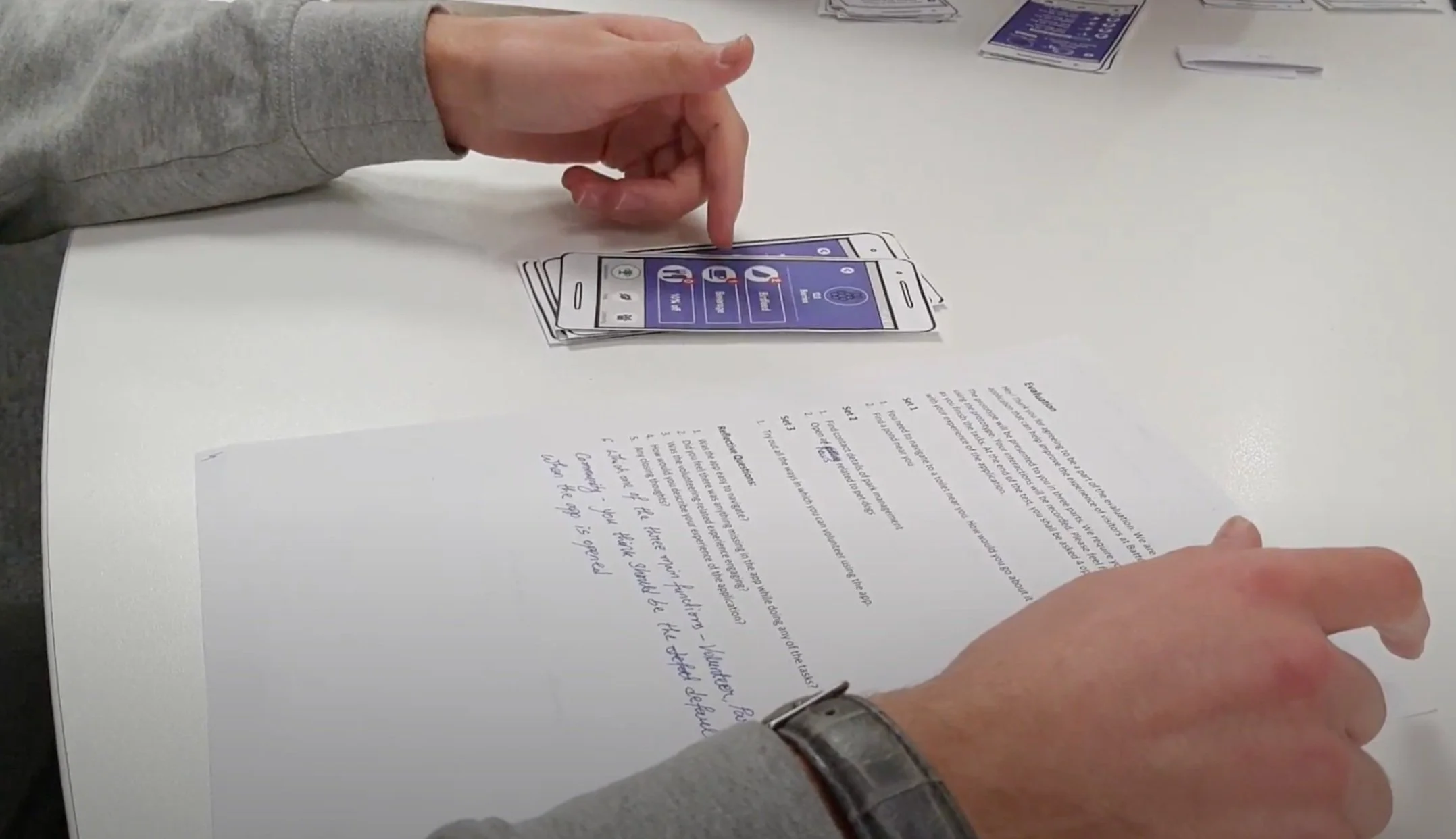
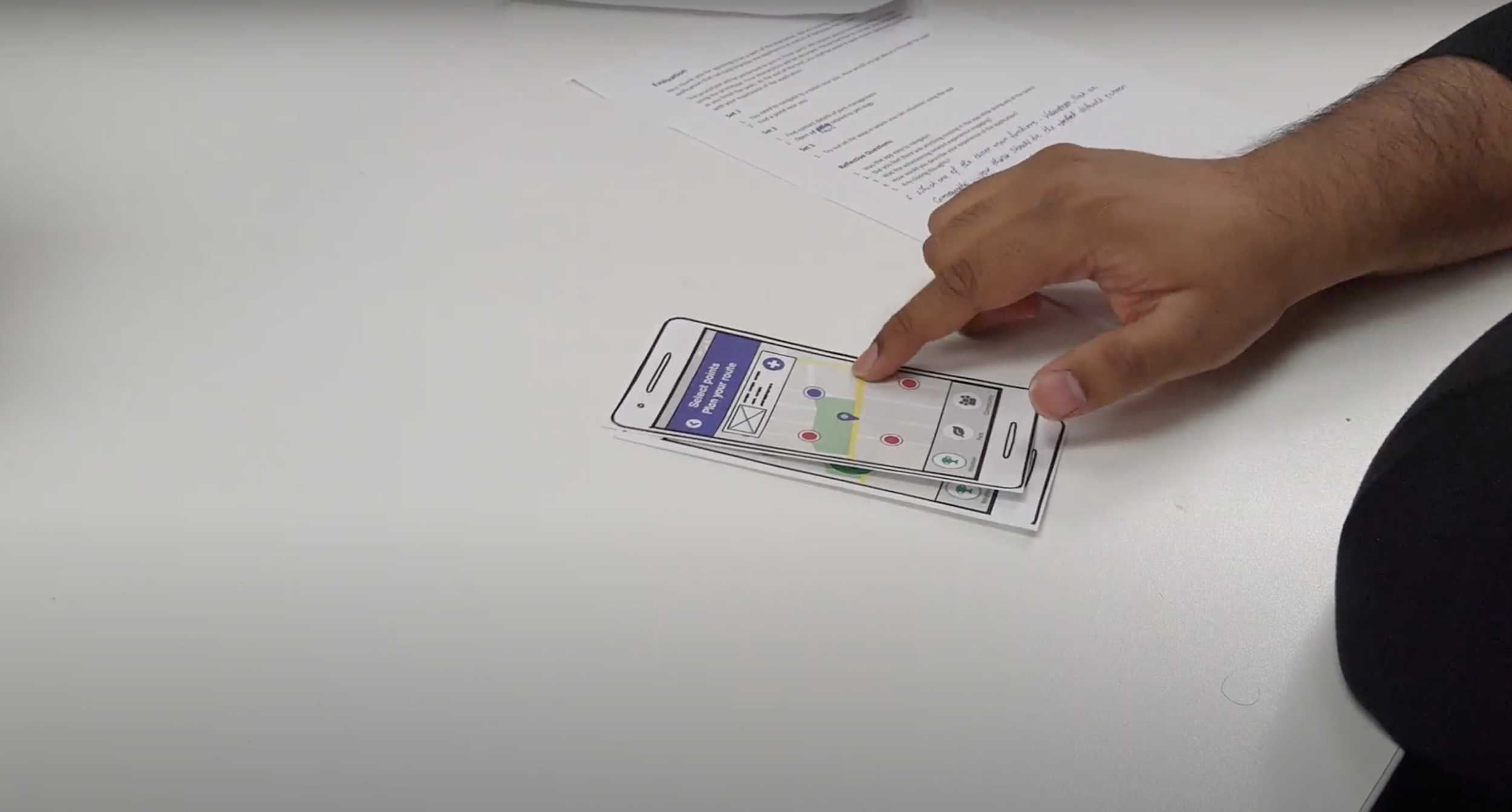
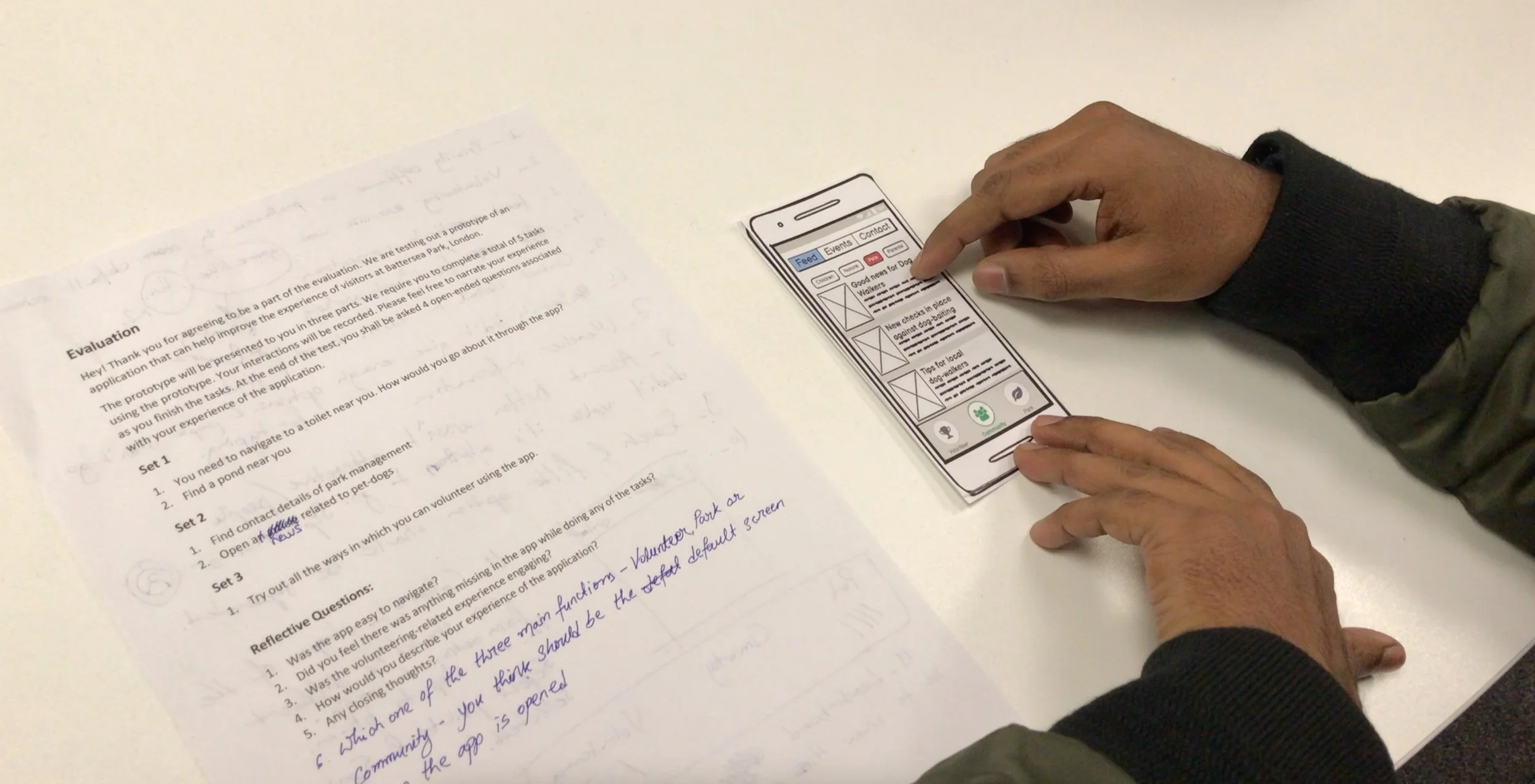
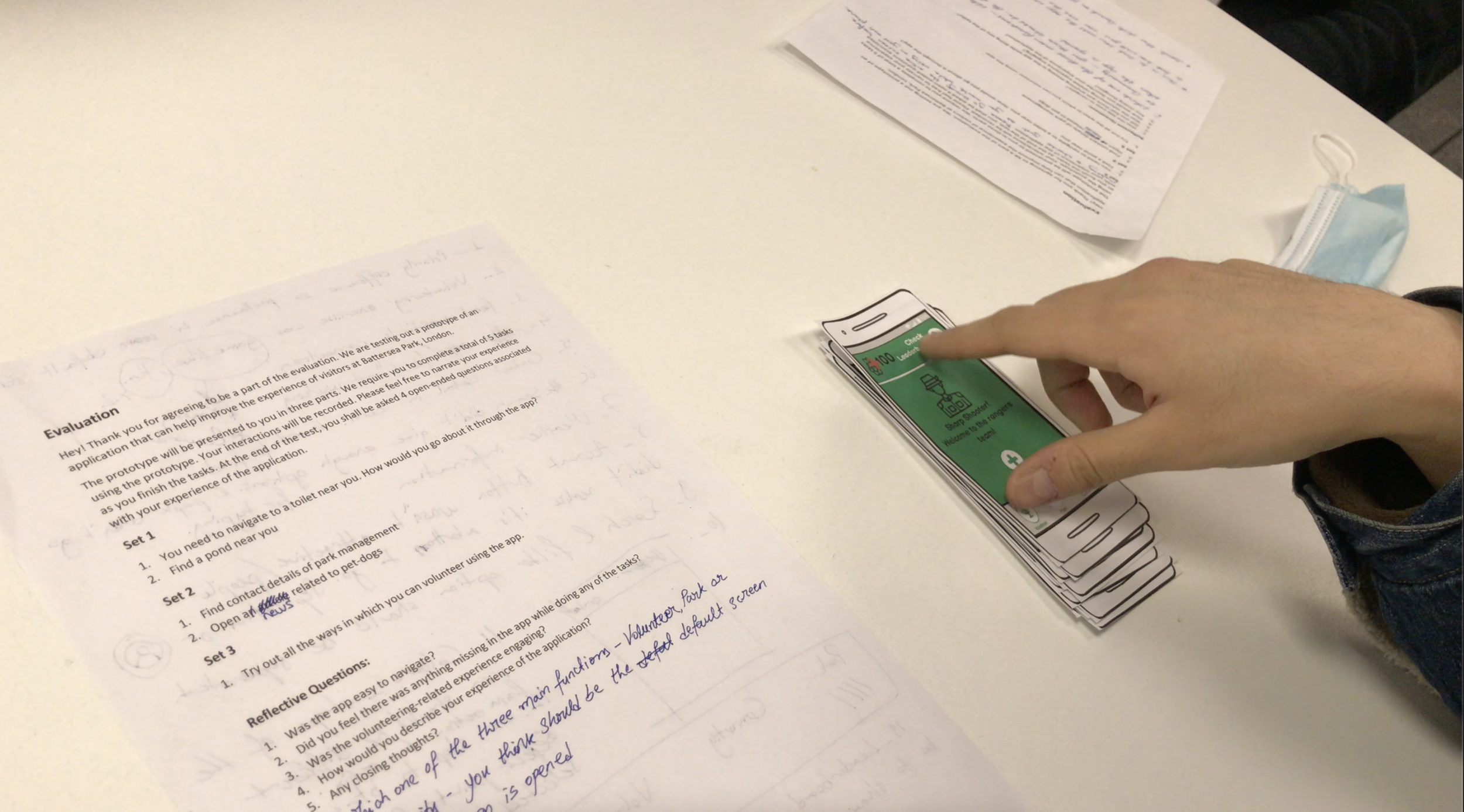
Paper prototypes were adopted for formative feedback and finding usability issues (dependability, efficiency, perspicuity). The level of detail was planned to be closer to medium-fidelity. This ensured all possible elements (including visual design choices) and interactions proposed could be tested out. The broad objectives were devised as follows:
➔ It was important to test if integration of the three different sections would hamper user’s navigation and understanding. It was also necessary to understand appropriate prioritisation within the sections in terms of default function and corresponding landing screen.
➔ Formative feedback, especially for ‘Volunteer’ section, was required to evaluate if the app was convenient and engaging for the users. This section allows audio-based input and output as an alternative to augmented reality based navigation for volunteers picking litter. It was critical to understand if both modes were intuitive for users.
Findings
➔ Usability issues found: (1) missing affordances in buttons and reward icons, (2) revise labels of the main sections and (3) navigation from reward screen.
➔ The tabbed sections were intuitively understood by all users i.e. all functions were found in the appropriate tab in first attempt.
➔ The designed instructions were clearly understood by all users.
➔ ‘Volunteer’ section was deemed to be engaging and motivating by majority of the users. The most exciting part of the gamified experience included virtual rewards,
followed by ability to speak out one’s progress to the app to proceed.
➔ Majority of the users preferred the ‘Park Nav’ screen to be the default landing screen - navigation was accordingly proposed to be the primary functionality.
GOING FORWARD
➔ The aim of this project was to engage visitors of Battersea park in activities of civic participation so that they can collectively improve each other’s experience.
However, user research provided insights into several practical issues associated with the park’s experience. In order for these insights to be truly representative of the chosen location, a broader observational research should be conducted across different seasons and different levels of footfall. This may help identify a variety of user behaviours, types of activities of the visitors, and spatial character of the park. These variations are bound to reveal significant implications for the design proposed and its adoption in the longer run.
➔ Moreover, the proposal requires realization of the digital kiosk’s interface through prototyping and user testing. This is critical for examining inter-operability between the kiosk and the mobile application’s interfaces.
➔ The development of high-fidelity mobile application will enable moderated remote/live testing. This would provide further insights into success of iterative
improvements made, as well as reveal broader usability issues when the application is used to physically conduct the designed tasks.