TIMEFRAME 1 week, Winter 2022
CONTEXT inspired by Discussion with an assembly line manager at lg
ROLE USER RESEARCH, UI DESIGN + iterations, HIGH-FIDELITY PROTOTYPE
TOOLS ADOBE XD, Photoshop, Illustrator
The Problem
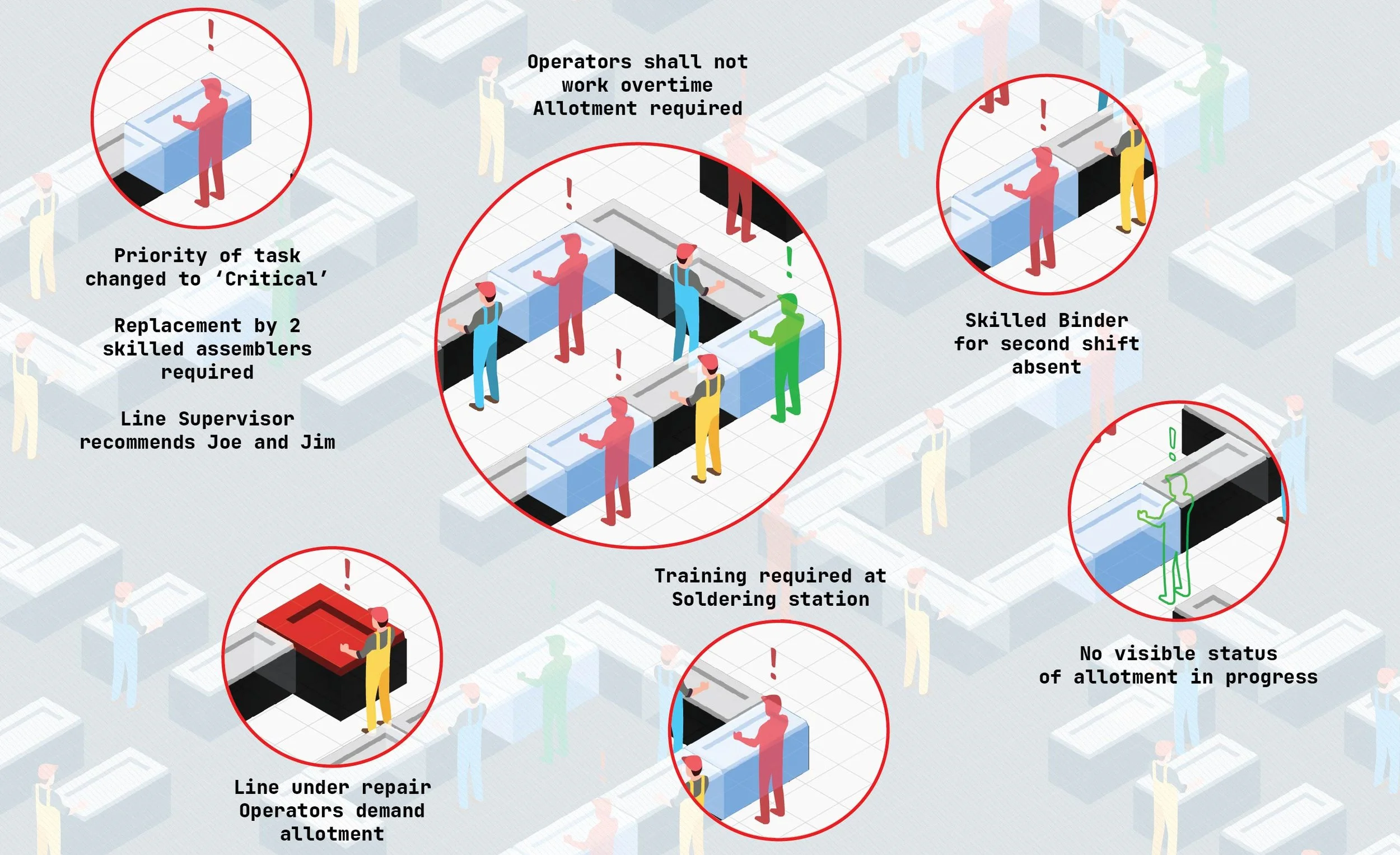
Station allocation across multiple production lines is a highly variable and time consuming process. Factors such as daily production requirements, attendance, labour agreements, demand for critical skills, and contingencies require regular communication between line supervisors, contractors, and labourers.
No dedicated communication channel: The communication is carried out through multiple channels such as phone calls and messaging.
Tasks issued by multiple line supervisors are not documented and are handled on the fly. This causes overlapping requirements and inefficient prioritisation.
A comprehensive mechanism for monitoring violation of labour contract requirements (such as minimum/maximum working hours) must be created.
Change in shift in a snapshot
A Solution
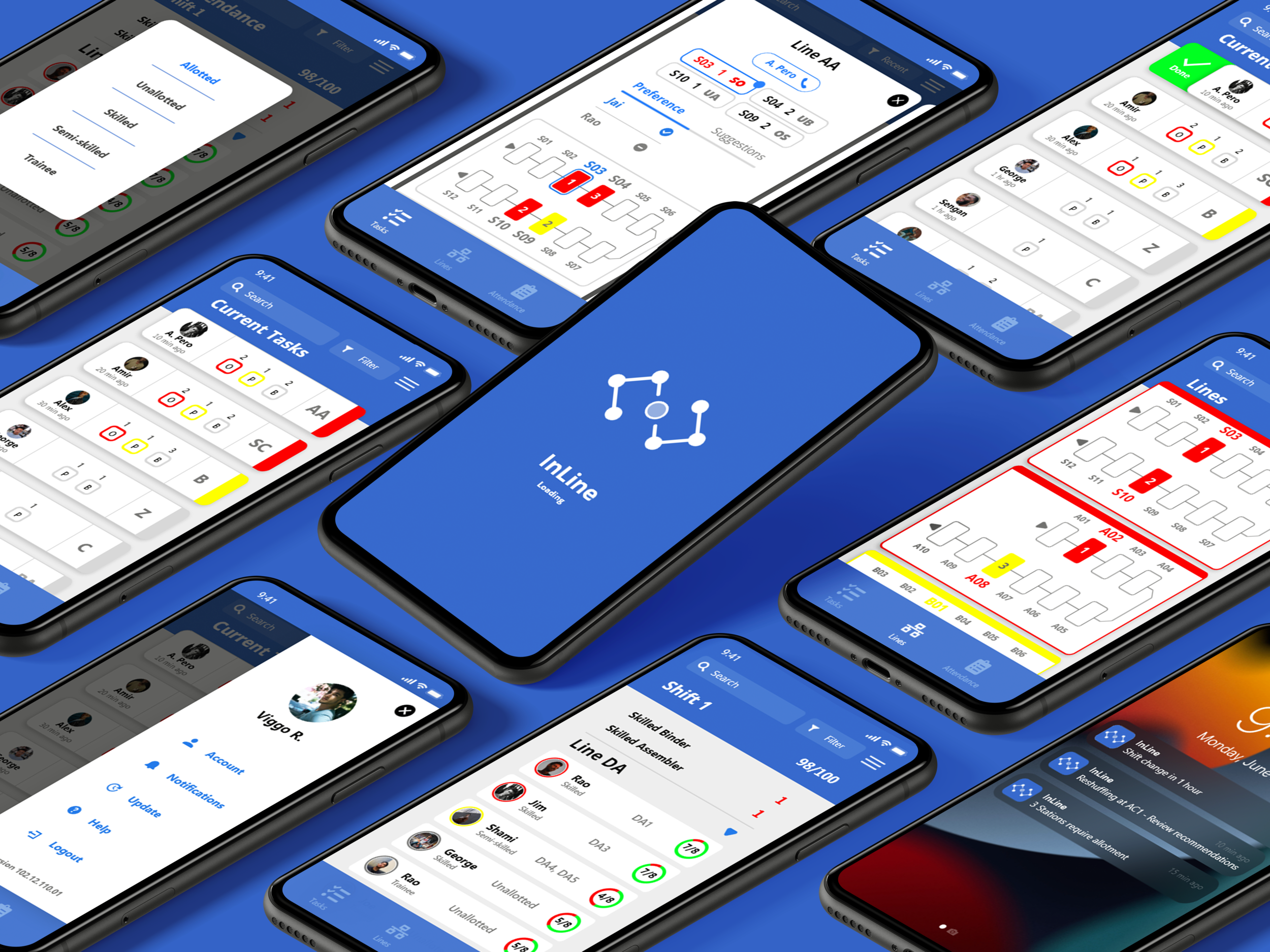
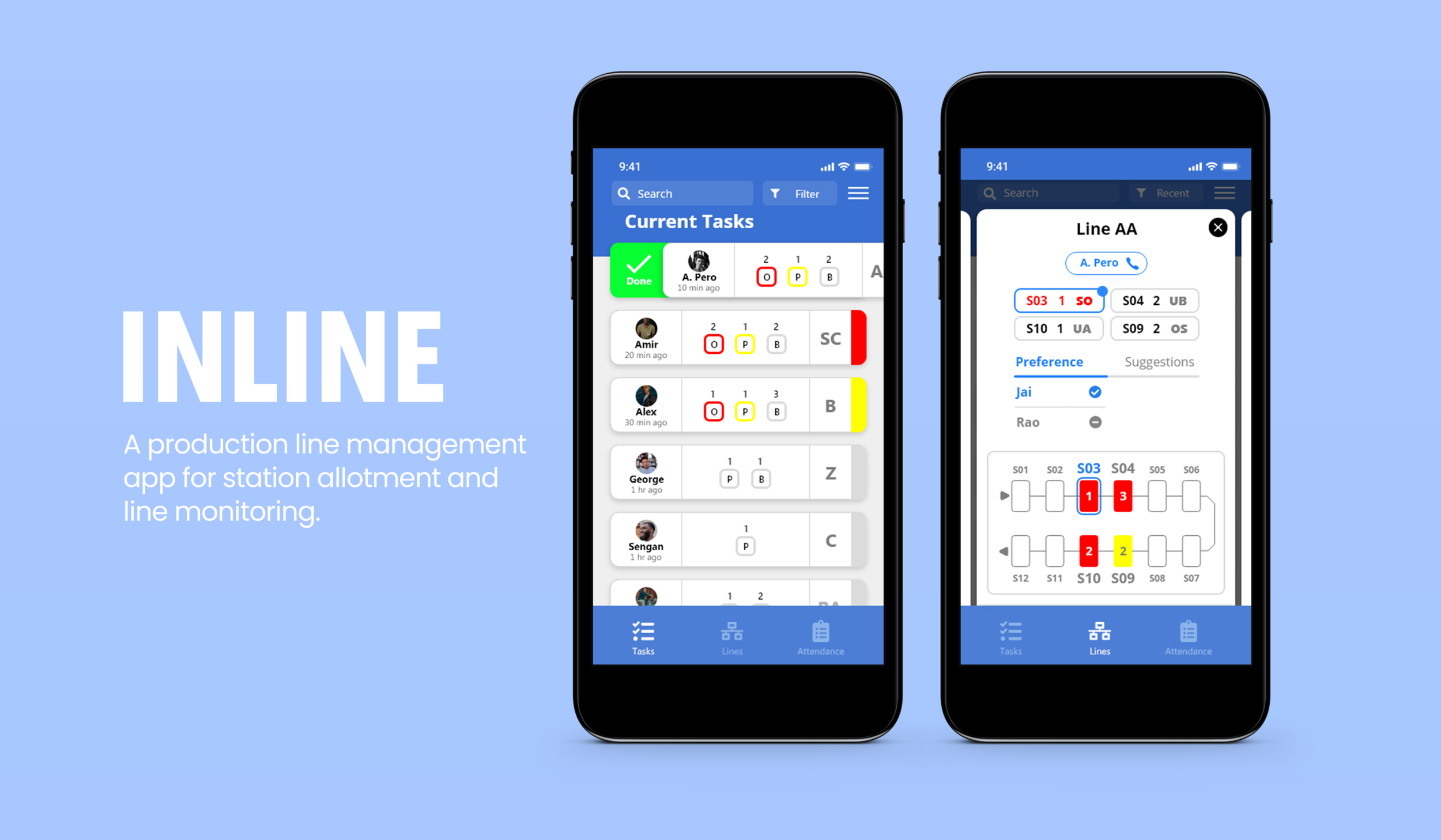
An app that streamlines communication
between supervisors and contractors
and leverages attendance database to assist in decision-making.
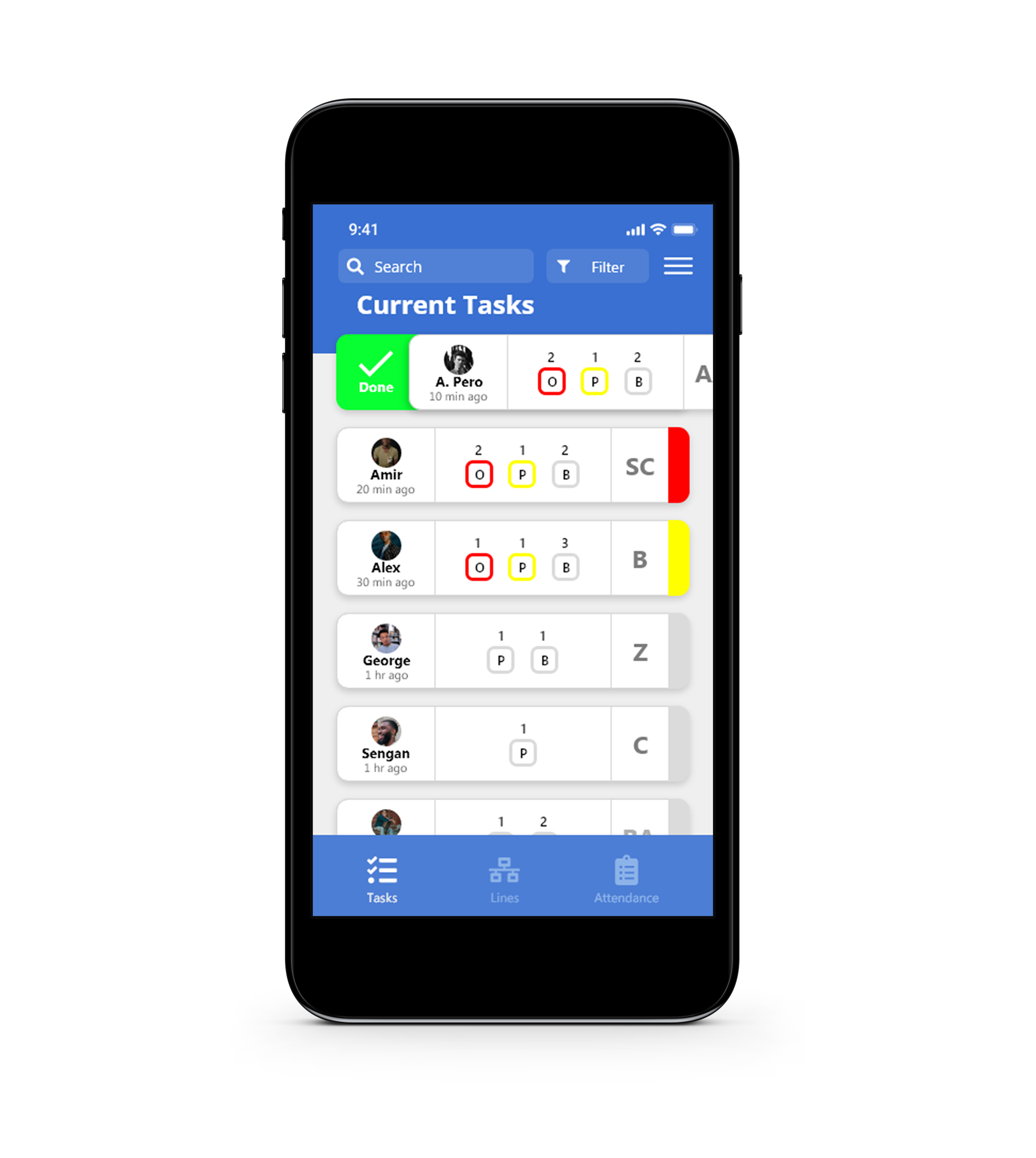
Task Management
- Streamlined format of communication
- Tasks ordered by criticality
- Quick previews
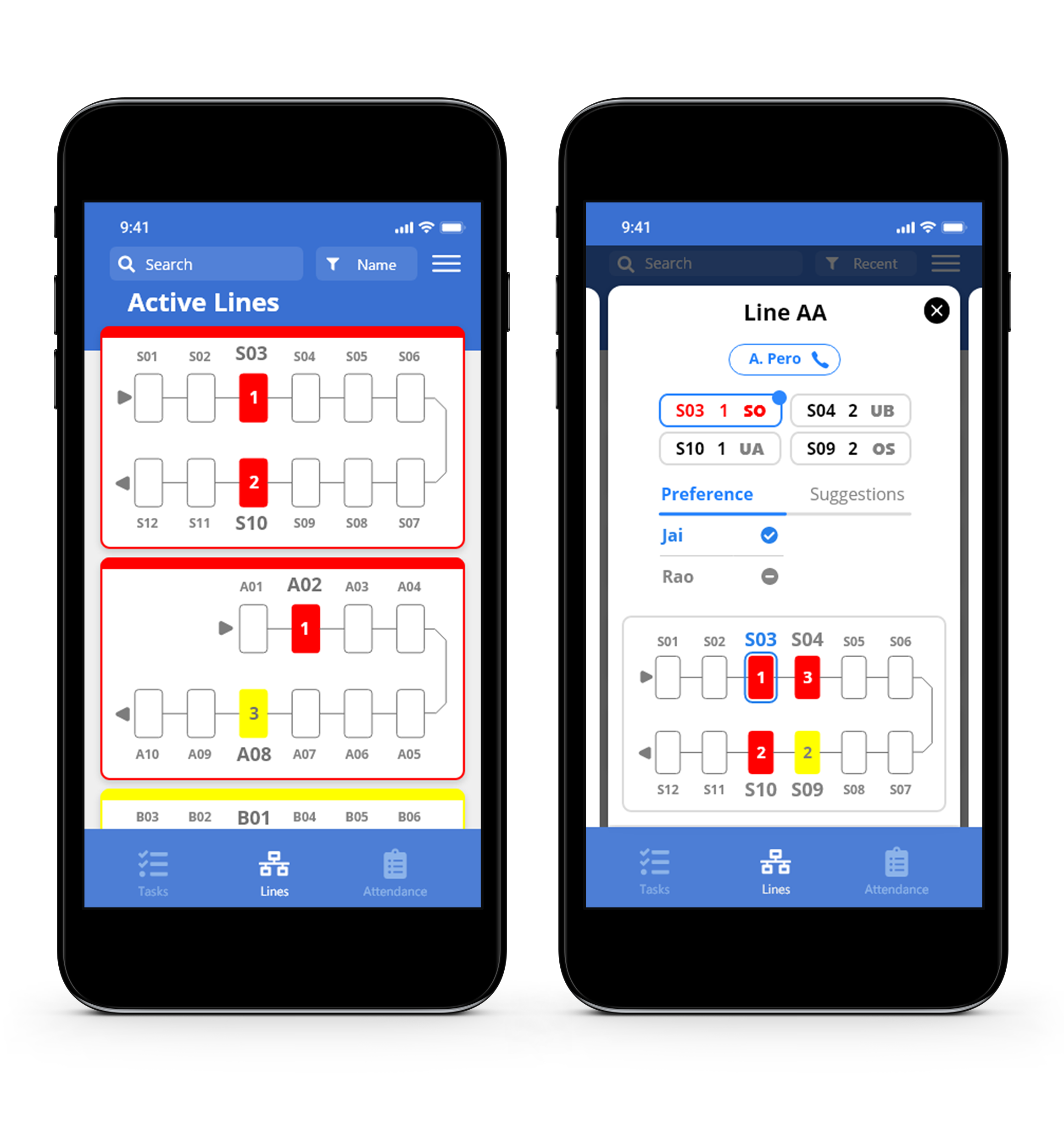
Line Monitoring
- Line-wise status updates and requirements
- Notes Supervisor’s preferences
- Automated recommendations per station
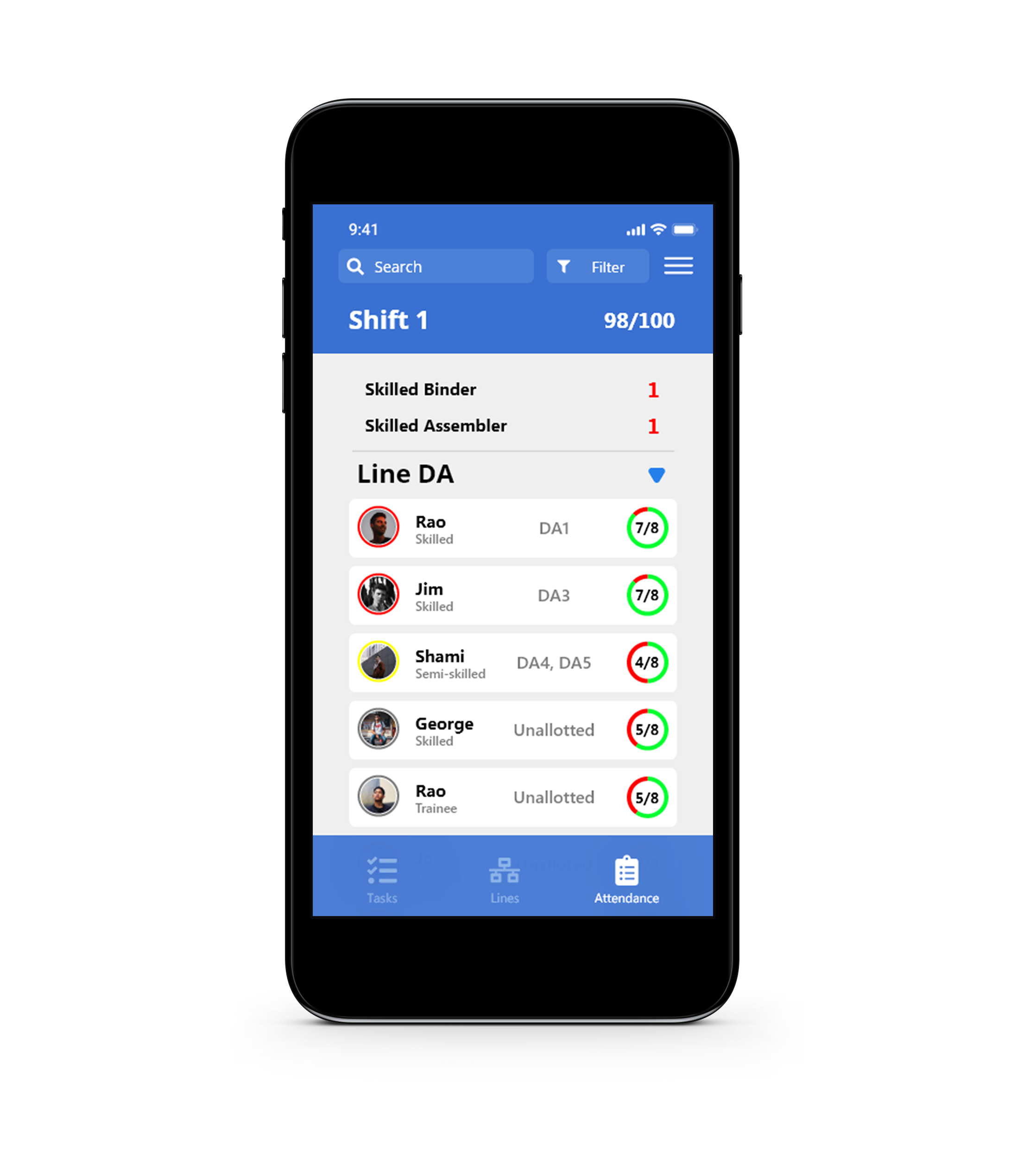
Attendance Monitoring
- Keeping overtime in check
- Making attendance surplus/deficit actionable
- Tap to contact
Process
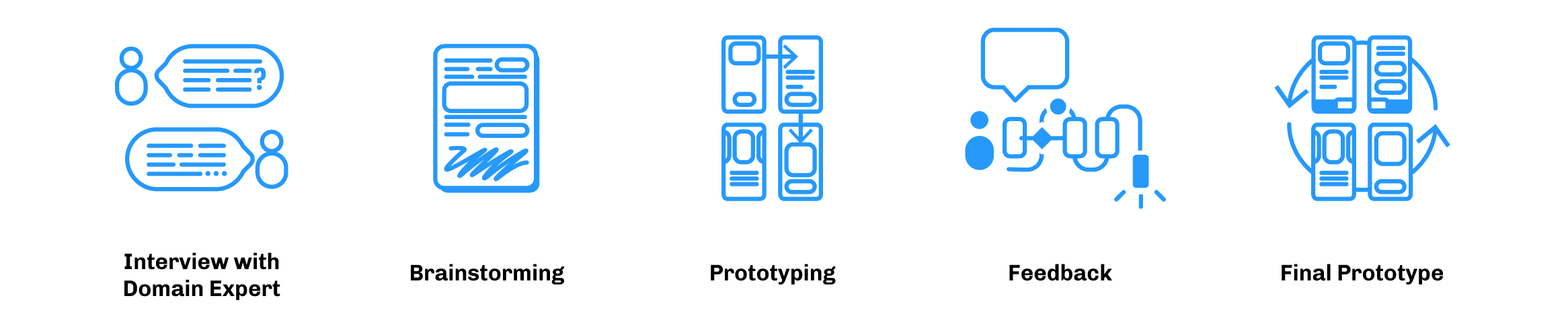
Day 1 | Interviews and BRAINSTORMING WITH CLIENT
3 types of interactions:
Supervisor to Contractor - for delegating allotment & stating preferences
Contractor-Operator - for allocation
Contractor-Supervisor - for updates
Time cost in communication due to:
Miscommunication/misinterpretations due to multiple channels of communication (phone-calls, WhatsApp, SMS)
overlapping requirements
manual prioritisation of allocation tasks
no regulation of overtime per allocation - leads to violations
How the communication is currently optimised:
Acronyms used (Skilled Operator = SO - helps chunking information - but often mistyped/misspelled and requires confirmation)
Supervisors use a dashboard to plan - daily production goals translate into allocation of operators by skill, and hours.
A directory of operators exists classifying skills as Skilled/Semi-skilled/Training
Opportunities:
Common platform to establish correspondence between all supervisors and contractors in real-time
Automated recommendations: Leverage daily attendance records - that includes shift attendance and a survey of availability for the following shift/day
Monitoring working hours: Need to record and monitor working hours to avoid overtime
DAY 2 | BRAINSTORMING
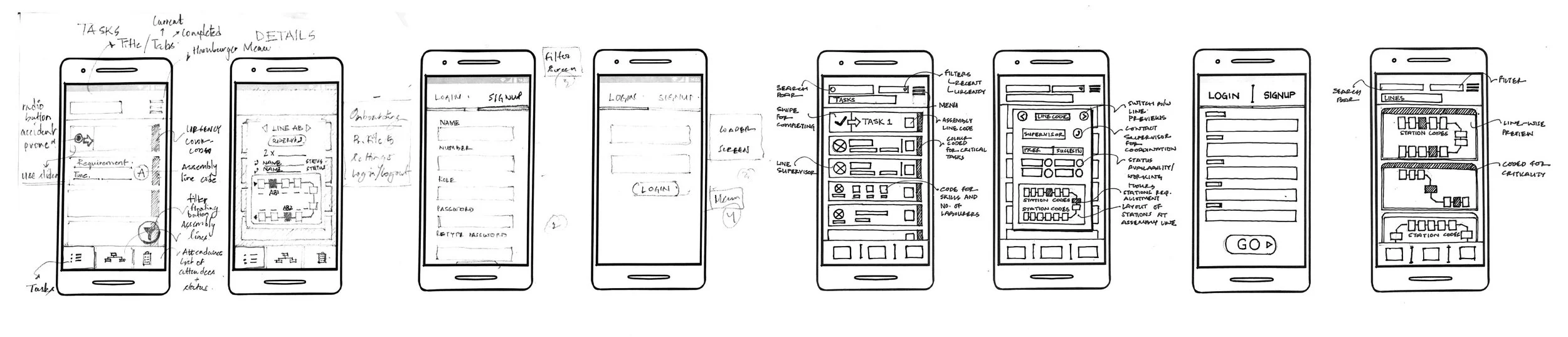
DAY 3-4 | PROTOTYPING
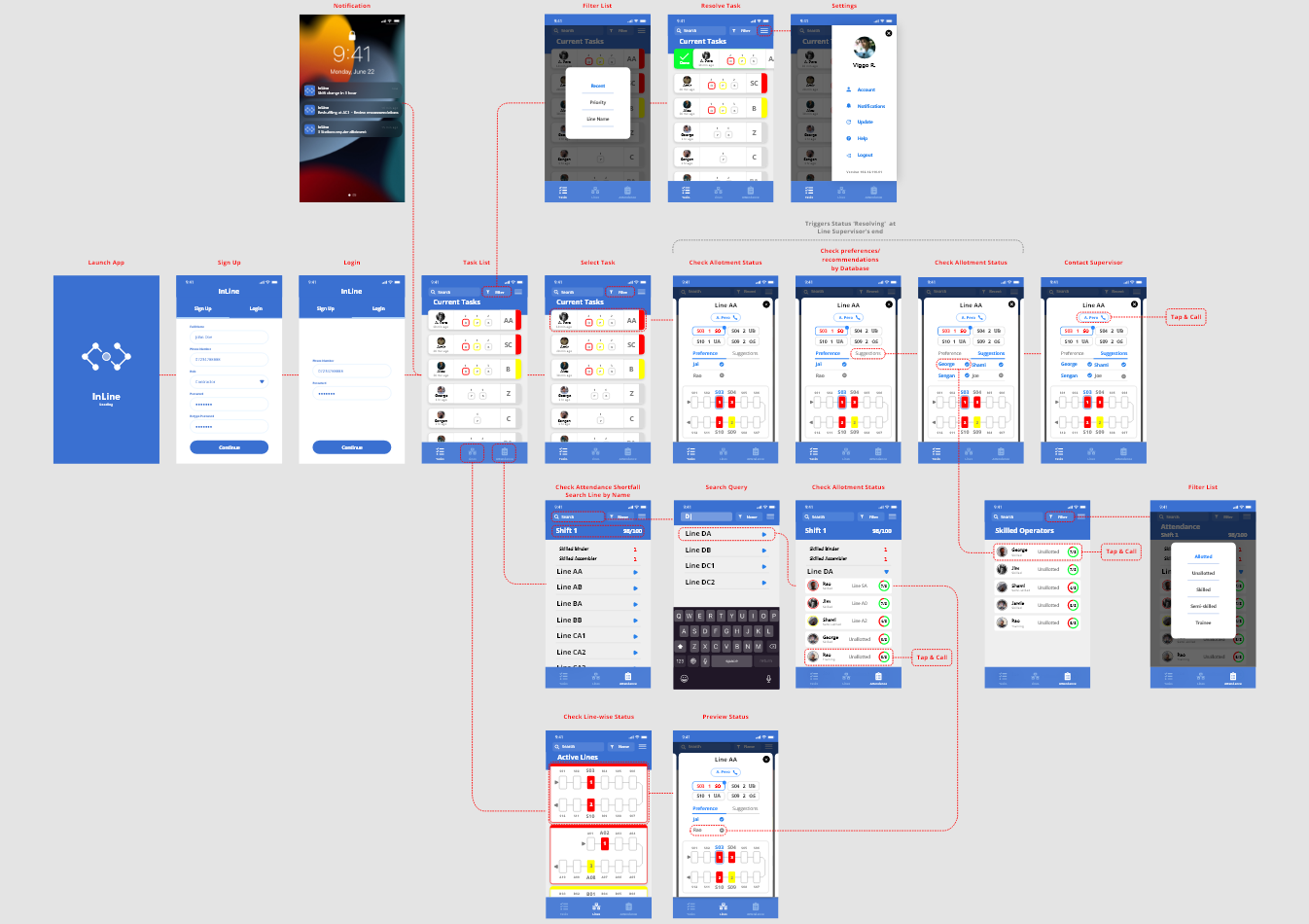
Low-fidelity prototypes

DAY 5 | FEEDBACK SESSION
Emphasis on making iterations actionable and intuitive
Chunking of information needs to adopt skill-level
Information to be laid out in the order of spoken language to ensure objectivity
Station-specific alerts
Plugging central database for generating preferences - criteria - Availability, skill, working hours
Card Layout Iterations
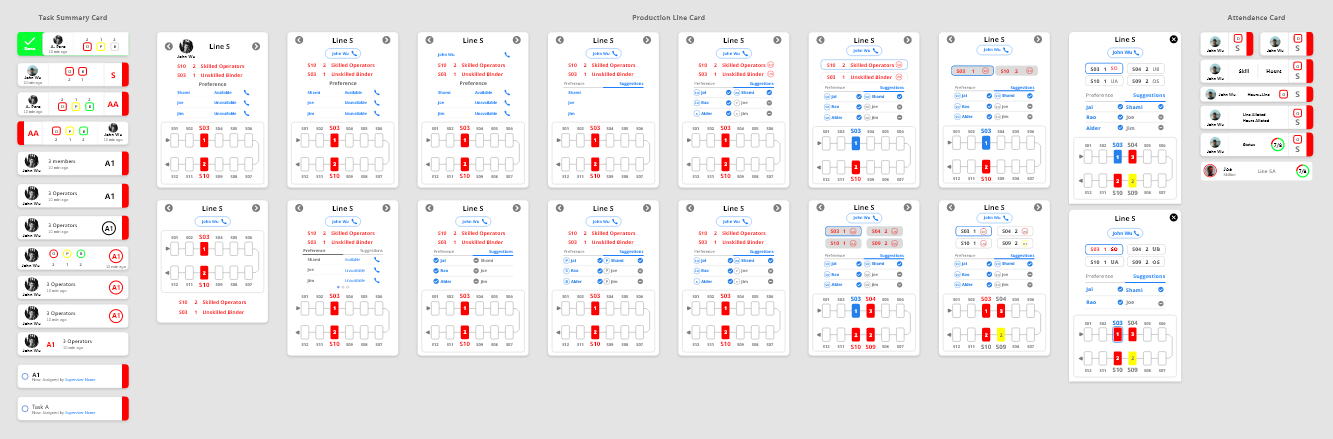
Reimagining the communication
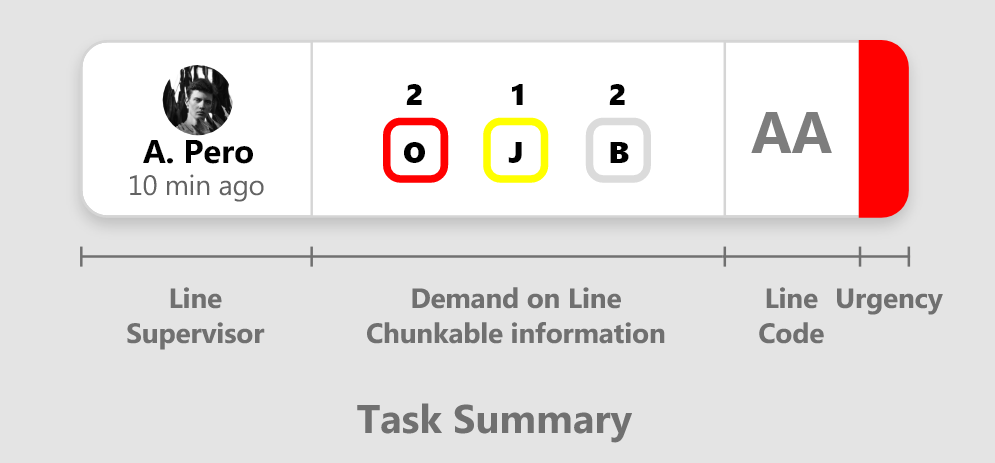
Supervisor:
…Pero this side, I need 2 Operators for critical task (operators must be skilled)- preferably Jim and Joe,
1 Jack driver for moderately critical task (must be skilled/semi-skilled), and 2 Binders (may be training or semi/skilled) on line AA…
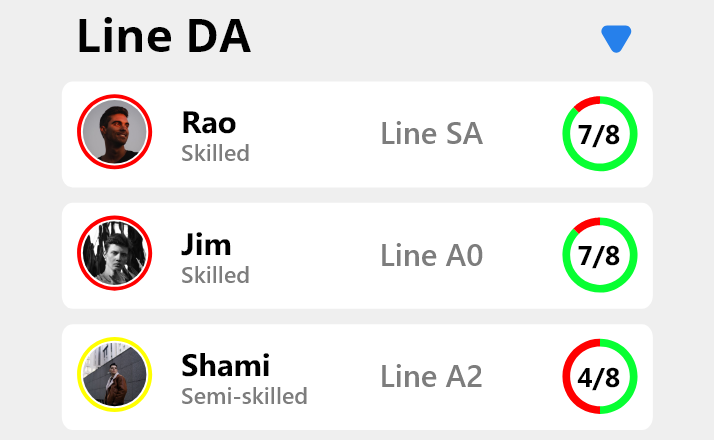
Contractor:
…Rao has been allotted to Line SA. He’ll be available only for 1 hour after current shift. Shami - semi-skilled is available after his first shift at A2…
Supervisor:
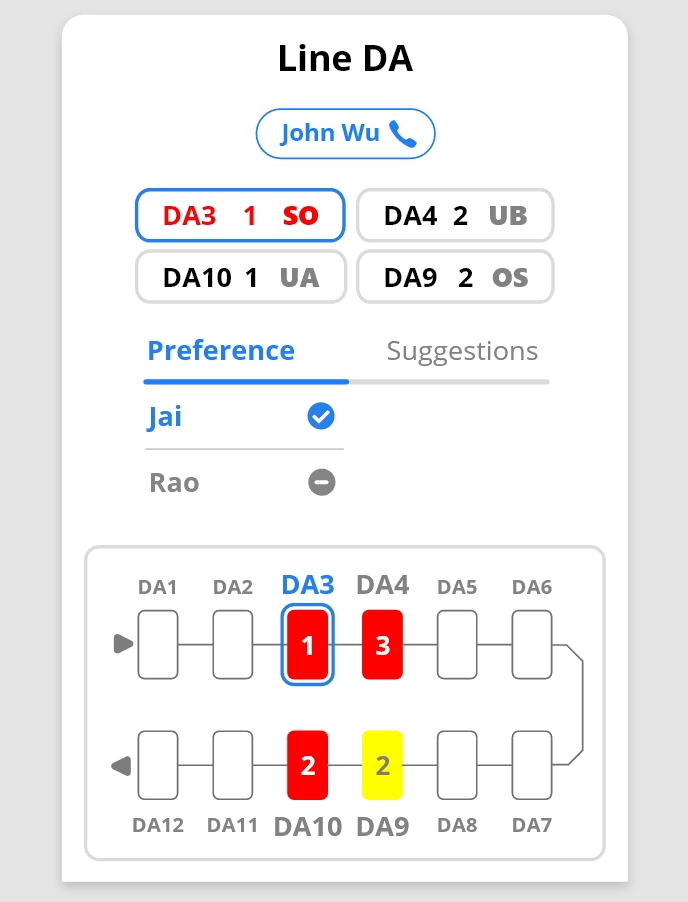
John Wu this side…I would prefer Jai or Rao on station DA3. Are they available? on DA4…, on DA9…,on DA10…
Day 6 FINAL PROTOTYPE
Final Card Layout
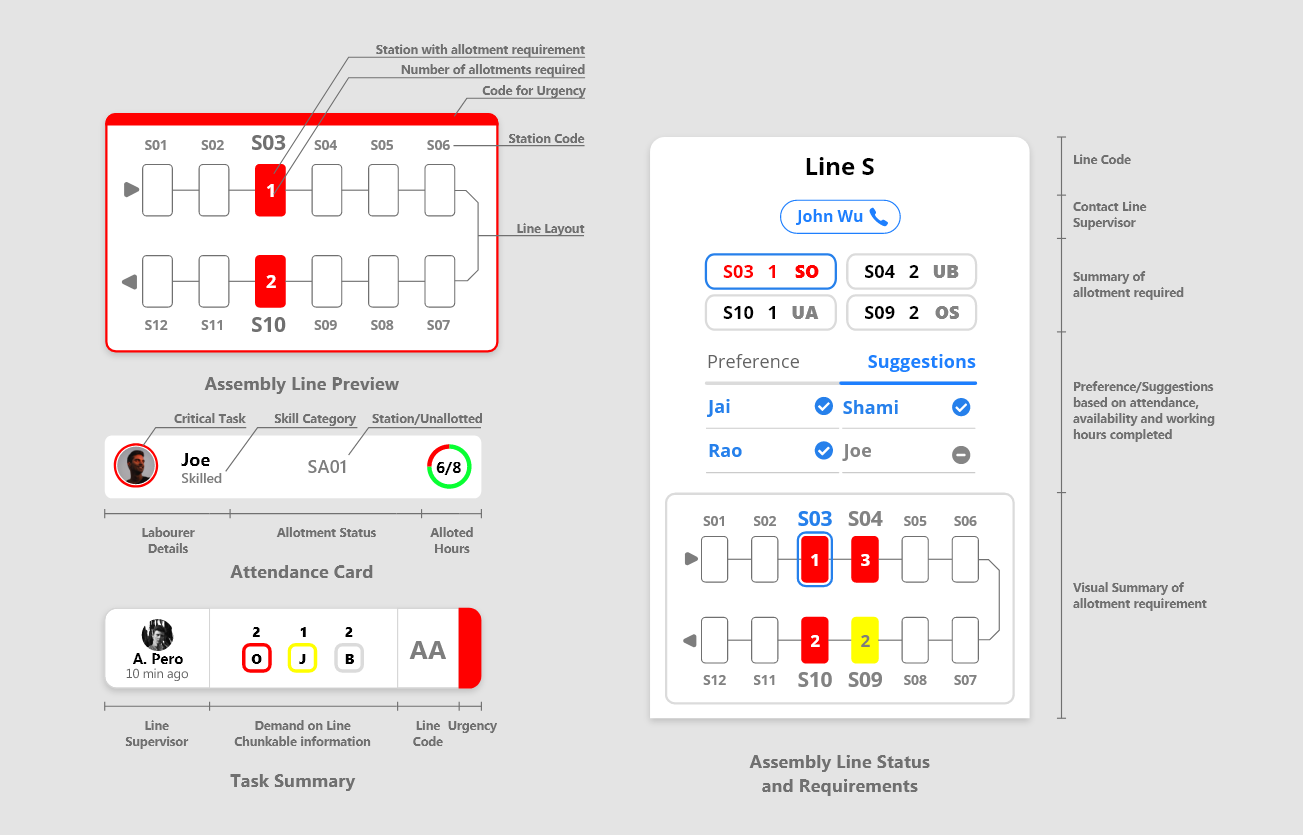
Wireframes